Hooking a Prehistoric Giant: Your Ultimate Columbia River Sturgeon Fishing Guide
Hidden deep within the rushing waters of the Columbia River swims a relic of another world. The White Sturgeon—often called a living dinosaur—has patrolled these waters for millions of years. As the largest freshwater fish in North America, landing one connects you directly to ancient history. I’ve spent decades studying these extraordinary fish as a biologist and Oregon sturgeon guide, and I can tell you with certainty: the rush of battling one of these river giants is unforgettable.
If a Columbia River sturgeon adventure has been on your bucket list, the first step is learning how this unique fishery works. It’s a world built on raw strength, heavy-duty equipment, and respect for a protected species. What follows is your full guide to preparing for the experience of a lifetime.
The Aquatic Living Fossil
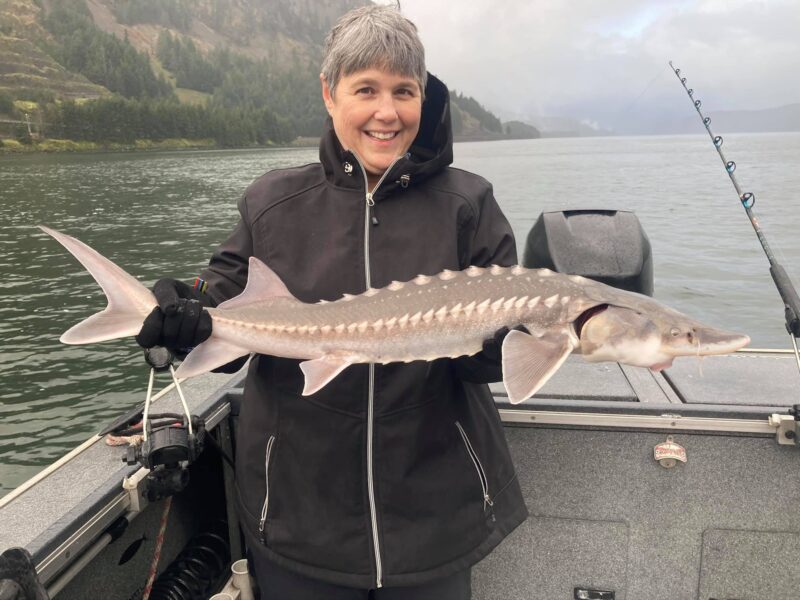
Why are White Sturgeon so captivating? Beyond their sheer size—sometimes over 12 feet long and more than 500 pounds—it’s their ancient heritage. These fish are primitive, cartilaginous, and more closely related to sharks than most bony fish, having changed little for millennia.
- Prehistoric Armor: Instead of scales, they wear rows of scutes—hardened bony plates—that make them look armored and formidable.
- Unique Anatomy: Four whisker-like barbels hang near their vacuum-like mouth, guiding them to food on the riverbed.
- Century-Long Lives: Growing slowly, sturgeon often live over 100 years, meaning the fish you release today might still be swimming when your grandchildren are grown.
Two Journeys, One River: Keeper vs. Trophy
Booking a sturgeon charter offers two very different types of fishing. Both are thrilling, but they serve separate purposes.
- Keeper Seasons (Harvest): These tightly managed seasons allow anglers to retain one sturgeon per day (two per year) within a strict size “slot limit,” typically 43–54 inches fork length. Often held above Bonneville Dam in winter or occasionally in the estuary, these brief seasons can be crowded and close suddenly once quotas are filled.
- Catch-and-Release Trophy Fishing (C&R): This is the heart of Columbia River sturgeon fishing. Open year-round in most waters, the goal isn’t to fill your freezer but to take on true giants—fish that can reach 8 or even 10 feet long. This is where the adrenaline kicks in as you wrestle with a prehistoric powerhouse.
Prime Time: When and Where
Sturgeon follow food migrations, so knowing the right time and place makes all the difference.
- Trophy Season (May–August): Summer is peak time for giants. Below Bonneville Dam, sturgeon gorge on migrating shad, creating world-class fishing. Farther downstream, the Astoria estuary near Buoy 10 becomes a hotbed for massive fish feeding on the lower river’s rich food supply.
- Keeper Seasons (Variable): Announced each fall for the coming year, these are usually most reliable above Bonneville Dam beginning January 1st. They are short and require close attention to updates from ODFW and WDFW.
Preparing for a Giant
Think of it this way—you wouldn’t bring a knife to a gunfight, and you shouldn’t bring a trout rod to a sturgeon battle. The gear must be tough enough to handle the sheer force of these fish.
- Rod: Heavy-action, 7–9 feet long, with a soft tip for detecting subtle bites and a strong backbone for hauling a giant off the bottom.
- Reel: A large-capacity baitcasting or conventional reel with a powerful drag, capable of holding several hundred yards of heavy line.
- Line: Braided, 65–100 lb test, giving you the strength and sensitivity needed for solid hooksets and long fights.
- Terminal Tackle: A slider rig is standard. This lets the mainline slip through the weight, so the sturgeon doesn’t immediately sense the heavy lead (8–24 ounces depending on current). It’s finished with a strong swivel, a 4–5 foot leader, and a barbless 7/0–12/0 hook, per regulations.
The Sturgeon Buffet
Sturgeon are bottom-feeding opportunists. Success depends on using oily, fresh bait that releases a strong scent trail. Anglers commonly use smelt, shad, anchovies, herring, and squid. On guided trips, bait is always fresh and carefully chosen for the season and location.
The Fight and the Release
Hooking a trophy sturgeon is nothing short of chaos. The bite often starts subtly, a faint tick-tick on the rod tip—but once you set the hook, brace yourself. The fish may sprint away in a blistering run or anchor itself deep against the current. Then comes the showstopper: these giants sometimes leap entirely out of the water in spectacular aerial displays.
But landing them is only half the battle. As anglers, we’re responsible stewards of this remarkable species. Handling them properly isn’t optional—it’s essential.
- Keep Them Wet: Oversized sturgeon must remain in the water. Their skeletons can’t support their mass on land, and lifting them risks fatal injury.
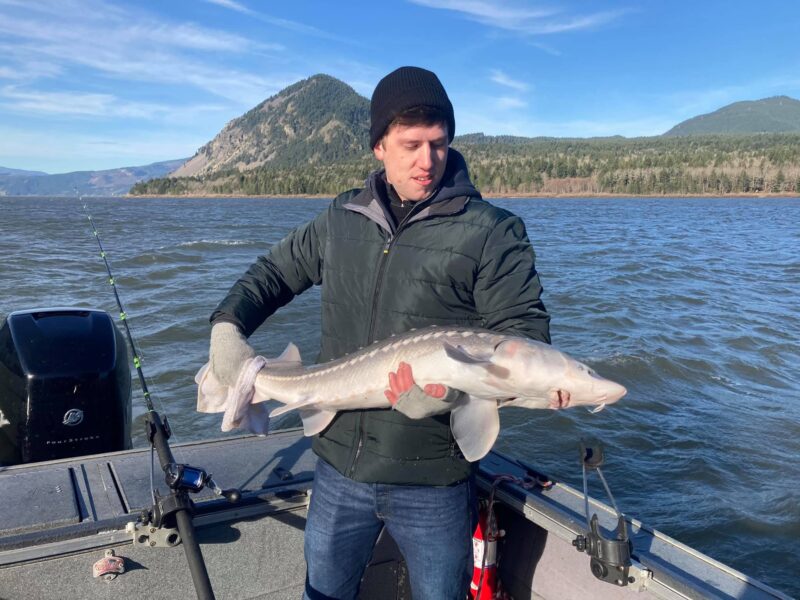
- Photo Guidelines: For a quick snapshot, lean over the boat and cradle the fish, supporting its head and fins. Never hold them vertically by tail or head.
- Swift Release: Use strong gear to reduce fight times. Once the barbless hook is removed, hold the fish facing into the current until it revives and swims away on its own.
Your Adventure Awaits
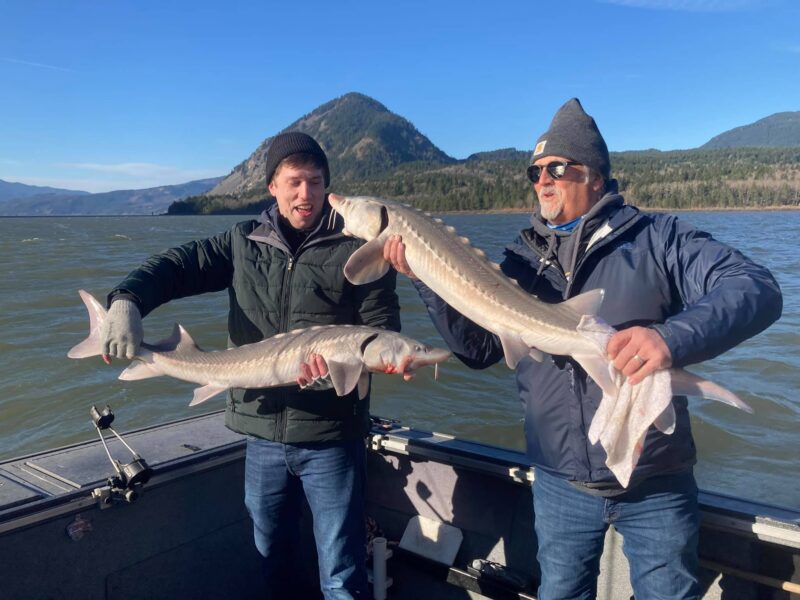
Fishing for Columbia River sturgeon is far more than a casual trip; it’s a rare encounter with living history. With complex regulations, heavy-duty equipment, and the skill needed to target these giants safely, hiring an experienced Oregon sturgeon guide is the best way to go. A seasoned guide provides not just the boat, bait, and gear but also an intimate knowledge of the river’s secrets, moods, and seasons.
So, are you ready to face a living dinosaur? Book your trip, embrace the fight, and come home with a story you’ll share for a lifetime.