A Beginner's Guide to Bobber Doggin': Oregon's Deadliest Steelhead Tactic
There’s a moment every steelhead angler dreams of: the water is cold, the air is crisp, and suddenly, your line goes tight with the unmistakable weight of a chrome-bright fish. In the world of Oregon steelhead fishing tips, there’s one method that consistently turns that dream into a reality, even for newcomers: bobber doggin’. It might sound a little strange, but this technique is, without a doubt, one of the most effective ways to connect with the elusive “ghost of the river.”
If you’re new to the method, you’ve come to the right place. We’re about to break down everything you need to know, from the core concept to the exact gear and on-the-water execution. Get ready to transform your steelhead game.
What is Bobber Doggin’ and Why Does it Work?
At its heart, bobber doggin’ is a hybrid technique that combines the best of drift fishing and float fishing. Imagine you’re walking a dog on a long leash. You lead, and the dog follows, occasionally sniffing the ground. In bobber doggin’, your float (the bobber) is you, and your bait is the dog.
The goal is to have your weight “tick” along the river bottom while the float, set much deeper than the actual water depth, “walks” your presentation downstream at the perfect speed—the speed of the current near the riverbed. This creates the most natural drift possible, presenting your bead, jig, or worm directly in the steelhead’s strike zone. Unlike traditional float fishing, where the bait is suspended, bobber doggin’ is a bottom-contact technique. This is one of those steelhead fishing techniques that is incredibly effective because steelhead hold tight to the bottom, and this method puts your offering right in their face, for longer.
The Complete Gear Setup for Success
Having the right gear is crucial. While you can get by with a standard salmon rod, a specialized setup will make learning easier and fishing more effective.
Rod
The ideal bobber doggin’ rod is long. Think 10′ to 11’6″ in length with a medium power and a moderate-fast action. The length helps you mend and control your line on long drifts, while the softer action allows steelhead to grab the bait without feeling instant resistance.
Reel
Both spinning and casting reels work, but a casting (baitcasting) reel is often preferred. It allows for smoother line release during the drift, which is critical for a natural presentation. Spool it up and get ready to fish.
Main Line
A high-visibility braided line of 30- to 50-pound test is the standard. The bright color helps you track your line on the water’s surface, and the braid’s lack of stretch ensures a solid hookset, even at a distance.
Float/Bobber
This isn’t your grandpa’s red-and-white bobber. You’ll need a specific “bobber doggin‘” or “slip” float. These are designed to lie on their side during the drift, only standing up or pulling under when you have a bite. They are rigged to slide freely on your main line between two bobber stops.
Weight Setup
The weight is what gets your gear down. A common setup involves a three-way swivel. Your main line ties to one eye, your leader to another, and a 4-6 inch “dropper” line with a lead weight is tied to the third. This ensures your weight sits at the bottom, while your bait drifts just above it. Use just enough weight to feel the bottom consistently.
Leader
A fluorocarbon leader is essential for its low visibility in the water. Start with a length of about 3 to 5 feet in a 10- to 15-pound test, depending on water clarity.
Lure/Bait This is where the fun begins! The most common offerings are fishing beads (imitating single salmon eggs), yarnies, small pink worms, or jigs tipped with bait. The key is to match your offering to the water conditions and what the fish are keying in on.
The Technique: Step-by-Step
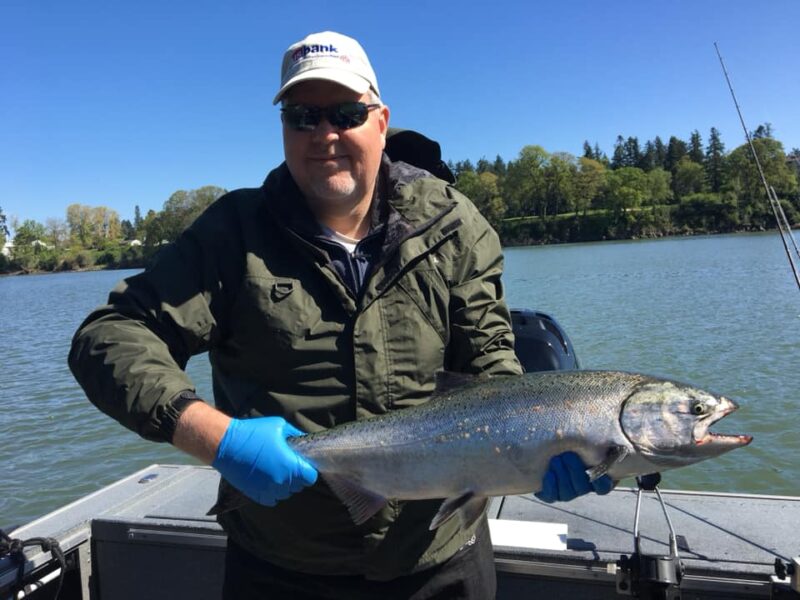
Now, let’s get on the water. Here’s how to catch steelhead using the bobber doggin’ method:
- The Cast: Cast your rig upstream and across the current at about a 45-degree angle. You want it to land far enough out to give your gear time to sink and find the bottom before it reaches the target zone.
- Achieving the Perfect Drift: This is the most important part. As your float moves downstream, keep your rod tip high and let the line out smoothly. Your goal is to keep the float moving at the same speed as the current without any drag. You should feel your weight periodically “ticking” or tapping the rocks on the bottom. If you’re not feeling the bottom, you need more weight. If you’re constantly snagging, you have too much.
- Identifying the Bite: A steelhead bite on a bobber doggin’ setup is unmistakable and incredibly exciting. Your float, which has been lying on its side and drifting along, will do one of two things: it will either get violently jerked straight down under the water, or it will stop completely and stand straight up. Both mean one thing: FISH ON!
- Setting the Hook: Don’t trout set! When the bobber goes down, point your rod tip toward the fish to reel up any slack, then sweep the rod back firmly and smoothly in a long, powerful motion. This drives the hook home.
Reading the Water: Where to Fish
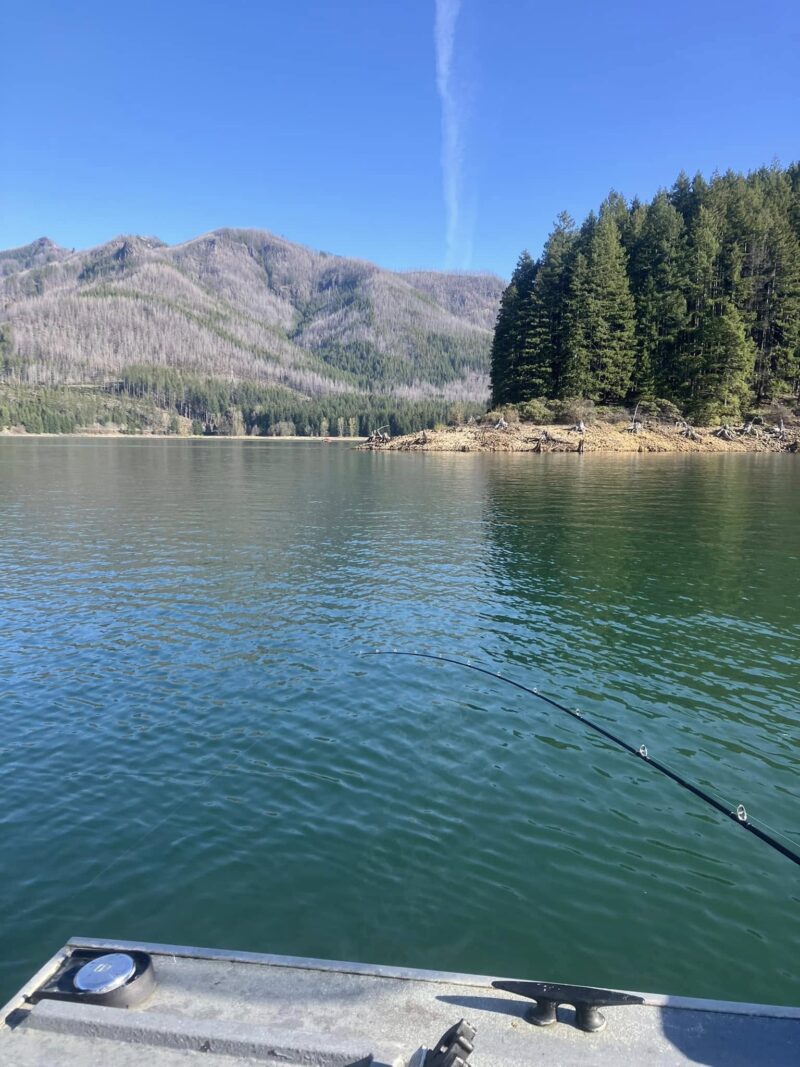
Bobber doggin’ for steelhead shines in classic steelhead water. Look for walking-speed currents that are 4 to 10 feet deep. Prime locations include:
Seams
Where fast and slow currents meet. Steelheads love to hold in the slower water and ambush food drifting by in the faster lane.
Tailouts
The downstream end of a deep pool where the water shallows up. These are classic holding spots.
Current Breaks
Any structure that breaks the current, like large boulders or submerged logs, creates a soft pocket where fish can rest. Drift your gear right alongside these breaks.
Bobber doggin’ is more than just a technique; it’s an active, engaging, and incredibly rewarding way to pursue one of the world’s greatest gamefish. It takes a little practice, but once you feel that first takedown, you’ll be hooked for life.
Ready to master the technique on the water? The fastest way to shorten the learning curve is with an expert guide. Book a guided steelhead trip with us today, and we’ll put you on the fish and provide hands-on instruction to make you a bobber doggin’ pro!